We have moved!
Come travel with us at OpenWideTheWorld.com
Showing posts with label world knowledge. Show all posts

Monday, February 16, 2015

Thank You, Ancient Egyptians... for big heads & pączki?

Would you believe that Carnival (which is the celebration leading up to Ash Wednesday, which is the day before Lent begins, which is the 40-day period before the day before Easter... with Sundays not counted as part of the 40 days... AGH!!!) is yet another tradition that traces its origins to pagan festivals of ancient Egypt? Yep!


I'm sure you can guess the story from there: Greeks and Romans took the customs to their respective empires, and later The Church magically transformed those customs into Christian practices. I imagine the Christian side of the event didn't stick for too many generations, and before long, it seems Carnival was full of pagan revelry again, albeit still timed with the Christian observance of Lent.

As Christianity spread throughout The New World, the pagan-yet-timed-with-Lent celebration of Carnival spread with it. And so today, countries all over Europe, North and South America, the Caribbean, and Australasia have various pre-Lenten festivals which incorporate a local flair. These can range from simple, like a single Mardi Gras treat in a typical Midwestern household, to extravagant, like the famous weeks-long Carnevale of Venice. Sometimes the festival develops an entirely new meaning, as is the case in Trinidad and Tobago, where, since 1838, Carnival has become a celebration of the end of slavery.

Because I love using holidays to learn about the world, I checked in with a few blogger friends to find out how pre-Lent looks where they live. Loved what I learned -and tasted!- along the way!

 pączki, POLAND photo: CZmarlin
Olga, a.k.a. The European Mama shared that Poland celebrates Tłusty Czwartek, or Fat Thursday five days before Fat Tuesday (a.k.a. Mardi Gras). A highlight of Tłusty Czwartek? Indulging in pączki, a jelly- or creme-filled donut which has apparently been eaten in Poland since at least the Middle Ages. (If it, too, has ancient Egyptian origins, I haven't discovered them yet.) Pączki is now a much-anticipated seasonal treat in Polish communities around the world! And yes, I had my first one, a creme-filled version, this year. Mmmm!

Giuliana of Washington, Dead Chef, actually grew up amidst the famous Venetian Carnevale. Guiliana reports that festivities begin weeks before Lent. Venice's Carnevale celebration became "official" more than 700 years ago, but it is thought to have been going on for a few hundred years before that!

Battaglia delle Arance, ITALY photo: Scrambled Nest
Today, Venice's Carnevale retains many early elements, such as costumes and masks, and copious numbers of deep fried dough treats. Check out Giuliana's post here to read more, including a recipe for her delicious-looking Frittelle di Carnevale!

Stefania at Scrambled Nest has a great character guide to those famous masks of Italy's Carnevale (here). The masks originated with an improvised style of theater popular in Italy from the 14th through 18th centuries, Commedia dell’arte, and remain a beloved part of Carnevale, more than 300 years later. Stefania also shares a quick guide to various other Carnavali around Italy, including the exciting and colorful Battaglia delle Arance (Battle of the Oranges) in Ivrea, Italy.

grosses têtes, FRANCE photo: Lou Messougo Blog
Claiming to be older than Italy's Carnevali, although shorter in annual duration, the Carnaval of Nice, France is also a worth-the-trip event! Phoebe of The Lou Messougo Blog has beautiful photos and descriptions of the flowers and the grosses têtes (big heads) that make up Nice's many Carnaval parades. Phoebe offers great tips, such as: be sure to go in costume, or you'll have to pay admission for the flower parades; and: watch the parades early in the week, before floats get covered in increasing amounts of spectator-sprayed silly string.

(If you're near Nice this time of year, you may as well check out nearby Menton's Fête du Citron, too. It's not related to Carnaval, but it is related to a whole lot of sunshine and citrus, so you can't go wrong! Phoebe will tell you all about it here.)

wooden masks, GERMANY photo: The Piri-Piri Lexicon
Not up for two-plus weeks of celebrating, but don't want to be limited to just this one Tuesday?

The Piri-Piri Lexicon's Annabelle says parts of Germany celebrate Fastnacht for about a week before Lent. Annabelle explains how scary pagan masks and costumes once frightened away winter and its evil spirits, but have since become characters responsible for distributing sweets and treats at the parade. Be sure to read to the end of Annabelle's post for your fun "ah, that's so German" moment of the day!

Of course, you might prefer a slightly more tame means of ushering in Lent. Why not join our friends of the British Commonwealth, and declare tomorrow to be Pancake Tuesday?! You can embrace the religious aspect of making pancakes to use up your rich ingredients before 40 days of fasting, or relive the pagan custom of consuming pancakes to tap into the power of the sun (which is round and warm, like a pancake, is apparently the reasoning). In either case, an excuse for a day of pancakes sounds yummy, and Eolia of La Cité des Vents has a great recipe for the French version, crêpes, here.

After checking out the world's celebrations, perhaps you'd like to get your students or children into the N'awlins Mardi Gras spirit. Then check out my latest facebook fan FREEBIE! This coloring page and open-ended writing sheet, in the typical N'awlins Mardi Gras style, will work for study in any language!


To access, click the image to get to my facebook page. Be sure to like the page, then look for the "Free downloads!" button in the left sidebar.

Et maintenant... laissez les bons temps rouler!

And however you celebrate, don't forget to thank an ancient Egyptian!

Tuesday, January 27, 2015

"Todo sobre los Pingüinos" and my New Zealand penguin regret

You know what they say: Youth is wasted on the young. I don't know about you, but in retrospecting my own life, I see a degree of merit in that somewhat pessimistic catchphrase. Case in point: penguins!

During a short part of my teenage years, I lived in New Zealand. Those many years ago, I had no idea that there were just 17 species of penguins in the world, that they all lived in the Southern Hemisphere, and that 3 of those 17 species can be seen in New Zealand. Thus, I had no idea what a big deal it was to actually be seeing penguins. Live. In their natural habitat. Not on a tour. Not in the zoo. Just experiencing them naturally. I took nary a picture (well, maybe one or two), and let their sighting simply be a passing moment on my travels around The South Island.


Agh!!! If only I could go back and relive my youth; I would appreciate so many things more fully than I did at the time. Penguins included!

Well, recently I have been able to revisit my penguin encounter, in a sort of virtual sense, in the creation of my new favorite packet:

"Todo sobre los Pingüinos"

(Click image to view this packet in my TpT store.)

"Todo sobre los Pingüinos" is a 6-page, customizable fold-out penguin craftivity booklet, entirely in SPANISH. Customizable means it's perfect for classroom differentiation, or for homeschooling families who have children at different levels completing projects together. And of course, Spanish means it's perfect for Dual Language, Immersion, or Second Language programs, and multilingual homeschoolers.

By the time my daughter completes this packet with her class, she will know better than I did to appreciate the wonder of seeing a penguin in the wild... with the added benefit of an increased Spanish repertoire, too. What more could one wish for?!

Tuesday, December 9, 2014

Lycklig Pepparkakans Dag!

Happy Gingerbread Day!

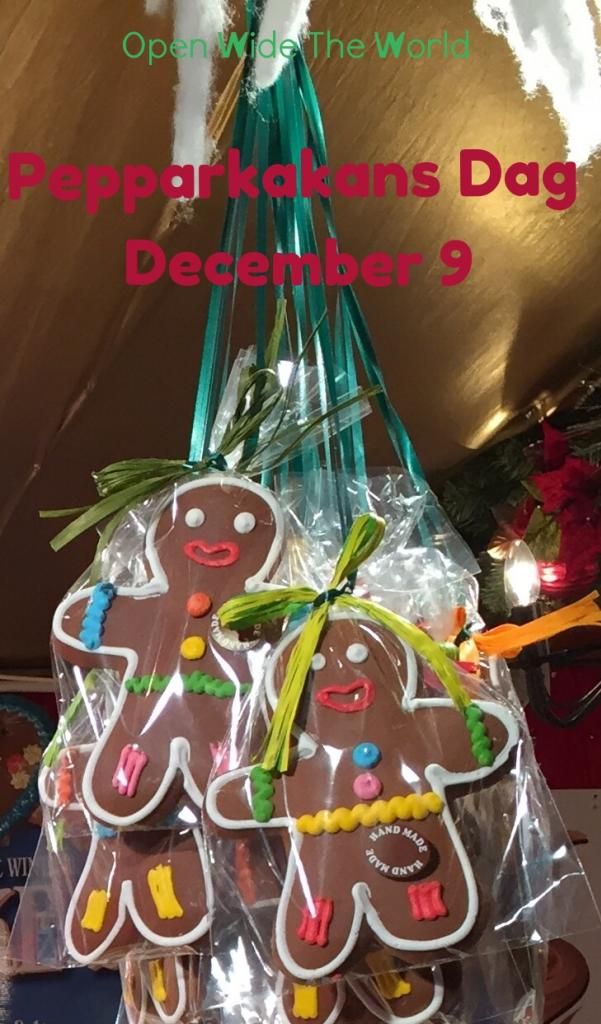
Christmas season in Sweden offiicially kicks off on Luciadagen (St. Lucia Day) on December 13… but one special day precedes the month of celebrations, setting the stage for the yumminess of the month-long Swedish Christmas: pepparkakans dag!

Pepparkakans dag literally means "peppercake day," but refers to Sweden's obsession with their beloved gingerbread cookies. It is thought that way back in the 14th and 15th centuries, these cookies were made with black pepper, thus the name… but there is every possibility this is a legend that has grown with the obsession. (More "stuff of legends" includes stories of nuns using pepparkakans to cure stomach ailments, and even a king being ordered to consume the cookies to improve his foul mood!)

Pepparkakans dag falls on December 9… today! On this day, Swedish families bake their gingerbread cookies for the season. Of course, many families opt to forgo the rolling pin and purchase their seasonal pepparkakar instead.

Want to make your own pepparkakar? There are plenty of recipes around the e-world… but an especially yummilicious recipe for pepparkakar is included in our Multicultural Kid Blogs' "Celebrate Christmas Around the World" packet.

Whether you're baking pepparkakar today, or making some other holiday favorite, I hope it is a yummy start to the celebrations ahead!

You can find lots more fun and yummy Christmas trivia and info on the MKB Christmas in Different Lands series.

Monday, November 24, 2014

Celebrate Christmas Around the World! with Multicultural Kid Blogs

I've not made a secret of how much I love globes and maps, and all things "world," I know. But have I ever mentioned my other love (well, besides clip art, food, and travel!)? CHRISTMAS!

Yes, I am one of those adults who just never outgrew the magic of the Christmas season. (I know, we really annoy the bah-humbuggers out there, don't we?!) And so, it has been my utmost pleasure to spend these past few weeks working with two fabulous fellow bloggy-packet creators from Multicultural Kid Blogs (Judith of Little Bilingues and Monica of Mommy Maestra), creating a "Celebrate Christmas Around the World" packet!


Just released today, "Celebrate Christmas Around the World" introduces the Christmas traditions and celebrations of six countries:

Brazil, France, Mexico, the Philippines, Puerto Rico, and Sweden

For each country, you will find:

♦ a cover page
The cover page features the country's flag and a Christmas greeting in the language of the country.

♦ a page of country facts
This page includes the country's official name and common name, its location circled on a world map, capital city, location, population, official language(s), and an interesting fact.

♦ 2 pages on Christmas celebrations
These two pages share the important and traditional celebrations of the country, and include cute graphics for students to color.

♦ a Christmas activity
The activities range from a word search to a DIY board game!

♦ a special holiday recipe
Make and taste a traditional holiday recipe from each country.


After completing the packet, students will have the opportunity to show what they have learned by answering 12 comprehension questions, 2 for each country.

We truly hope you and your students enjoy this peek into Christmas celebrations around the world! On behalf of all of us at Multicultural Kid Blogs, we wish you a wonderful and multicultural Christmas season!

Sunday, October 26, 2014

Día de los Muertos: los altares

When Becky of Kid World Citizen recently reminded me that Chicago is home to the National Museum of Mexican Art, I mentally filed that under "check it out someday soon!" So when the NMMA's "Rito y Recuerdo" exhibit topped Aimee's (Raising World Citizens) list of Chicago's "must-do's" for Día de los Muertos, we were ready to go!

Wow!... or "¡Guau!" What an impressive display! More than 60 artists participated in the creation of this exhibit, which includes "altares y ofrendas," installations, and popular art. We maximized the exhibit by joining a guided tour, and learned so much more than the "altares" basics we knew upon arrival.  

Here are the highlights, for other Día de los Muertos neophytes like us:

An altar would traditionally be constructed in 3 tiers, each tier making an important representation: the underworld, earth, and heaven. Of course, in all things Día de los Muertos, the underworld is not depicted as a horrible place full of misery, and on Día itself, its residents are always seen celebrating!


Along with photos, personal mementos and trinkets, each of the 4 elements - earth, air, fire, and water - are commonly represented in the items chosen for the ofrenda. Fire and water are easy to spot in the candles and drink offerings. Fruits and grains, and even clay pots, can represent the earth. Air can be a bit of a stretch, at least in the "altares" we saw, where altar shawls and "papel picado" that blow in the wind symbolized air.


I imagine there was plenty more to learn, but 6 year olds don't necessarily enjoy the lengthy nature of guided museum tours, so that is the extent of our "altares de muertos" knowledge acquisition for this year.  Never mind, though: we have already decided on a return visit to the NMMA for Día de los Muertos 2015! (And next year, I have a feeling the then-7-year-old will bring enough money to buy a bigger sugar skull!)

*     *     *     *     *     *
If you've enjoyed this peak into "altares y ofrendas" and are ready to try your own, MommyMaestra is running an Ofrenda Photo Contest. To make it more fun, one of my favorite books is included in the prize pack!

Excited to teach your kids or students more about Día de los Muertos? Be sure to check out my Día de los Muertos Bilingual Activity Pack, with a book, mini-books, and activity sheets, all in English and Spanish!


Friday, July 4, 2014

Our World Cup Pinnacle

Yesterday was "the" big day for soccer at our house!

The France vs. Germany rival goes back many generations in our family. I am a third generation American of Alsatian descent, which means that my family and ancestors have, at various times, been:
  • politically & geographically French, but culturally German, 
  • politically & geographically German, and culturally German, 
  • politically & geographically French, and culturally French
  • and even politically Swedish for a short duration, just to keep things interesting.
My mother still remembers the older uncles and great uncles heatedly debating the degree to which our family is French vs. German. But with yesterday's match, we were all German... most likely because we're awaiting the birth of my German nephew in a matter of days, so we're a little more sentimental toward our German side right now. (You may remember my sister's wedding to a German last spring. Brrr!)

While the adults were absorbed in the game, I was so happy to have our World Soccer Cup Activity Pack for Kids to keep Mag engrossed in the action. She loved the idea of being our score keeper, and in the loooong stretch of scoreless time, the activity pages were equally engaging.

To preview the activity pack, or to purchase, click here.

It will be so nice to relax and not worry too much about the outcome of today' games... but come Tuesday: Go Deutschland!

Tuesday, July 1, 2014

"Read Around the World" with Multicultural Kid Blogs

This summer, the bloggers of Multicultural Kid Blogs invite you to "Read Around the World!" Throughout the summer, member bloggers (and friends) are sharing favorite multicultural books, covering age ranges for the entire family.

Here's my pick for a new favorite: a bilingual book entitled My Diary from Here to There/Mi diario de aquí hasta allá, by Amanda Irma Pérez.


You can see the author read her book aloud (albeit to a less than attentive audience -- probably the age group) here.


To browse through all the MKB bloggers' book choices, check out our newest Pinterst board, dedicated to this great summer series. Happy Reading!

Monday, June 30, 2014

Canada Day, 2014 - FREEBIE!

In honor of the 147th birthday of our neighbor to the North tomorrow, please enjoy this FREE coloring sheet!

Click image to download.

Happy Canada Day!

Graphics by Educlips & Creative Clips

Monday, May 12, 2014

Countdown to World Cup 2014 Brazil!

In our house, I have to admit, there are no diehard fútbol fans... but there are 3 diehard fans of travel, geography, and languages, and 2 who love sport. Combine those elements, and you've got the World Cup!

In just 31 days, on June 12th, 32 teams will begin a 32 day long competition, with one victor emerging on July 13th. If you'd like to take advantage of this "countdown period" to infuse some global awareness into your family's enthusiasm for World Cup, head over to my facebook page for a new fan FREEBIE:


For each day of the countdown, post the flag of one of the competing nations, and learn all the countries by the opening game.

Please note that the countdown officially began on Sunday, so Monday starters should post Uruguay, #31.

Having trouble figuring out how to access this fan freebie? Look for this button on my facebook page:
(Hint: it's right next to the "thumbs up - Likes" button.)

For more World Cup info and trivia, Mommy Maestra has a great post up today. Check it out here!

Some fun ideas for World Cup face painting, a lively music video or two, and other World Cup related pins are filling up my new "World Cup - Copa Mundial" pinterest board, too.

And watch later in the week for a fun activity pack coming from Multicultural Kid Blogs!

Sunday, May 4, 2014

Kodomo no Hi, and Haiku FREEBIE

As I mentioned last year at this time, despite having an ever-increasing number of Japanese relatives, we've only just begun incorporating Kodomo no Hi into our cultural observations. In times past, a family with no sons, like our family, would not have observed Kodomo no Hi; it was traditionally a celebration of sons and male children. Girls had, and still do have, a separate holiday, Hina matsuri, in March. Now, however, Kodomo no Hi has become more of a "Childrens Day," with less emphasis on gender. You can read more about the history and tradition of Kodomo no Hi in last year's post, or in this fascinating post by Melibelle in Tokyo.

Since we made koinobori last year, as well as learning the colors in Japanese (check out my multilingual FREEBIE), we wanted to do something new this year.

Two things came to mind right away. (Actually, three things came to mind, but I'll get to the third at the end of today's post.) One: we love books, and Two: we love the outdoors.

So if you're focusing on Japan, and thinking literature and nature, what else can you do but... HAIKU!

 Haiku with Kids

How can you "do Haiku" with a 6-year old? We began with the library, where we found a new favorite book, Guyku, by Bob Raczka. It's actually called Guyku: a Year of Haiku for Boys, but it truly wold appeal to all kids, and to the parents who read to them. Before reading, we talked about the 5-7-5 syllable structure of Haiku, which is definitely something a kindergartener relates to! And we talked about how a Haiku captures one single moment of time in nature. And from there, we read the book, counted some syllables, and tried to make up some funny lines of our own for the silly illustrations. Super fun!

To cement our new awareness of Haiku, we took a trip to an area arboretum. The Morton Arboretum in the Chicago suburbs is phenomenal, and hosts plantae from all around the world. The flowering cherry and pear trees from Japan were in full bloom today, and helped to inspire this Haiku-esque composition by Mag:

The blowing grass and
Branches are waving to me.
Petals loop-the-loop. 

I was impressed by the poem, and even more-so by the enthusiasm of participation. I see more Haiku in our future!

Would your kids enjoy having a go at Haiku, too?

And thus concludes our first foray into Haiku.

But now, remember that 3rd thing that I said came to mind when we were thinking of observing Kodomo no Hi? I bet you guessed it: food! Watch later this week for our on-going Japan adventure and a great FOOD-related FREEBIE!

 Sayonara!

Friday, December 20, 2013

Maligayang Pasko! a Filipino Christmas

"Maligayang Pasko!" 
Merry Christmas, Filipino style!
 
Christmas season is in full swing! It's such a perfect time to inject some familial heritage into the festivities, and keep Mag tapped into her roots between visits with Kam's side of the family.

Of course, to truly embrace Christmas, Filipino style, we're about 3 months behind! Yep, that's right: in Philippines, the Christmas season encompasses the final FOUR months of the year! My Midwestern tendency, upon hearing this, is to imagine the cause is the shorter days/longer nights of the season. But we can't forget that, being so near the equator, the duration of daylight in the Philippine Islands varies by only about an hour between the longest night of the year and the shortest night of the year.

So why do they do it, then, if not to escape the darkness of the long nights of the season? No one in the family has any idea... but is sure sounds fun!

Well, here in the good ole U.S. of A., we can't incorporate a 4-month celebration into our current lifestyle. But our family has managed to enjoy some of Kam's fondest memories of childhood Christmases in Philippines, beginning with PAROL, or Christmas lanterns, which seem to be popping up everywhere this year (like here and here).

photo attribution: Keith Bacongo

In Philippines, these Christmas lanterns can be small and simple, or enormous and elaborate. We made a paper version that children grow up making at home. Since Kam couldn't quite recall the how-to of homemade parol all these decades later, we followed these very user-friendly youtube directions to recreate the memories.


We made it into a family project, each person working on one "arm" of the star, with good results!

Of course, no self-respecting Filipino celebration would be complete without a FEAST! Traditionally, lechon (a whole roasted pig) would be served.

photo attribution: Arcade
Since we had just had lechon at Thanksgiving, we went a little more low key for our pre-Christmas Filipino feast. Our local Filipino grocer supplied beef and chicken empanadas (my fave!) and puto (steamed rice mini cakes). We made an enchilada-esque dish that was Kam's mom's recipe, and the pièce de résistance: BIBINGKA!

photo attribution: Roberto Verzo
Bibingka is a Filipino Christmas cake, made with rice flour and coconut milk. It can be baked directly in a ceramic baking dish, or baked in a dish lined with banana leaves. Because this was our first time making binbingka, we decided to go all in, and baked in the leaves. We combined elements of each of these three recipes (one, two, three), to come up with this version:


(click recipe for printable pdf version)

I hope you enjoyed this little peak into Christmas in Philippines. We had such a wonderful time celebrating Kam's roots this week that we are planning to incorporate more traditions into our festivities on Christmas day!

Wherever you are, and however you're celebrating, I hope it is just as joyous! Merry Christmas!

Love learning about "Christmas in Different Lands"? Head to the Multicultural Kid Blogs world tour... so many fun traditions, so little time!

Monday, December 2, 2013

It's beginning to look a lot like Noël, Navidad, Weihnachten...

The Multicultural Kid Blogs: Christmas in Different Lands event begins today!

Every day from now until December 24, bloggers from around the world will be sharing their local Christmas traditions. I'll be posting on December 21 with traditions from Kam's homeland of Philippines.

You can get the complete schedule of bloggers and countries, as well as checking out the linky party of other traditions, crafts, and recipes of Christmas around the world, here.

So grab a mug of gløgg and a buñuelo, and get ready a festive trip around the world!

Tuesday, October 29, 2013

Día de los Muertos, chez nous

"Day of the Dead, at our place" 
(affiliate links included, for convenience)
We always enjoy learning about different traditions and holidays from around the world (like this one). So, given that we spent years living just a stone's throw distance from Mexico, and that Kam's culture shares the same holiday, I don't know how Día de los Muertos, or "Day of the Dead," hasn't made our radar screen until now.


This year, thanks to a quirky looking book on prominent display at the local library, Día de los Muertos has made it to our house. Mag inherited Kam's inclination toward the cutsied-up macabre (think Jack Skellington and the like), and thus was captivated by The Dead Family Diaz, by P.J. Bracegirdle. This book instantly rocketed to the top of our short list of family faves, primarily for the visuals, but the story is equally amusing.

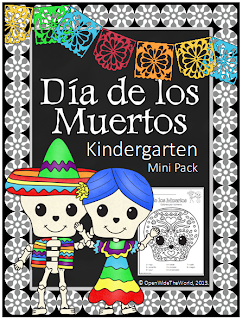
The Dead Family Diaz inspired us to delve deeper into the traditions of the día. We spent some time learning the vocabulary of the holiday, and even created and completed a few related worksheets, incorporating the fun theme into math and early literacy practice for Mag's dual language endeavor. (This kindergarten-level Spanish packet is available at my TpT store, here.)

Once familiar with the new vocab, Mag was also enthralled by Calavera Abecedario, by Jeanette Winter, although The Diaz storybook still tops my list.

Of course, the highlight of any event is the food, right? When frosting cookies for Halloween, we kept a few "calavera" (skull) cookies aside, which we frosted, Muertos-style, tonight, getting ready for the big day. We'll also head to a nearby Mexican grocer to pick up some "pan de muerto" (which we will eat, rather than leave at a cemetery), as well as indulging in horchata - recipe. Okay, I have no reason to believe horchata is part of the tradition of the day... or that it isn't, for that matter. We just like to include it in any Mexican-related event at our house. (We also love agua fresca -recipe-, but the MidWest fall weather puts one in more of an horchata mood.)

For a first Día de los Muertos celebration, I could almost leave it at books, food, and worksheets... but somehow crafts just seem to be calling out to be included.

I love the calavera sun catcher from Mari (remember her fab tooth fairy certificates from this post), and of course we'll be making some papel picado (seen at right). Photo released by Guillerminargp

el Próximo Año

We're having such a good time with Día de los Muertos this week that I can't fit it all in... so here's what I've already got in the line-up for next year:
I guess it's time to get a 2014 calendar, because I see a party taking shape already, 367 days in advance!

Sunday, October 20, 2013

The Global Travels of the Tooth Fairy


Tooth Fairy clip art by Lita Lita
Yowzers! My little Mag just lost her first tooth! Somehow I felt more prepared for her to go off to school than I felt for her to lose her first tooth.

Sure, Mag was all excited at the prospect of the Tooth Fairy (which we didn't necessarily intend to introduce, but pop culture and school made that decision for us)... but me?

You probably guessed it: my first thought was, "Hmm, wouldn't it be fun to hear how this is handled in other countries." So I asked a few blogofriends.

British expat Amanda at Expat Life With a Double Buggy shares that she was able maximize the legend by convincing her son that the Tooth Fairy doesn't enter messy rooms. Genius! Now living in the Netherlands, Amanda notes that the "Tandenfee" does exist, but "is not a universally Dutch phenomenon. Some use it, some don't."

A Bilingual Baby's Marta notes that in Spain, as in many countries, "it's not a fairy, but a little mouse. It's called el ratoncito Pérez." Apparently, in Mexico this little magic mouse leaves extra money for a front tooth.

Ute of Expat Since Birth says that, "In German speaking countries we also know the Zahnfee, but she comes from the American/UK tooth fairy. In Italy the 'fatina dei denti' does the same as in USA/UK."

Spanglish-House's Cecy has combined traditions, so her kids think that Tooth Fairy and Ratón Pérez are associated. Her eldest has developed his own tradition: leaving a tip to encourage them to come early. Wonder how the tooth characters divide the spoils?

Would you prefer to avoid the Tooth Fairy tradition in your household? Never fear, there are parts of the world that are free of all tooth-taking characters. Olena (Bilingual Kids Rock), Olga (The European Mama), and Natalie (After School for Smarty Pants) report that there is no such legend in Ukraine, Poland, Russia, or Belarus.

But if you have, by choice or by force, embraced some version of a tooth character tradition in your household, and would enjoy the chance to make it a multicultural event, Mari has some super cute Tooth Fairy Receipt printables, in several languages - yay! These are available at Inspired By Familia. Thanks for sharing, Mari!


Want to read about more tooth-loss traditions from around the world?

Kid World Citizen's Becky recommended a book that is now a family fave around here: Throw Your Tooth on the Roof: Tooth Traditions from Around the World.
This book is a must read for families who embrace the world. What a fun way to find out:
  • What country has a Rolling Calf who will take you away with your tooth if you're not careful? 
  • Which moms plate the tooth with silver and make it into a charm? 
  • Who asks the moon, a mouse, or a saint to replace their tooth? 
  • Which country has parents burying their children's teeth in university gardens?

Don't you just love how a single tooth can take you on a world tour?! Thanks, Global Moms, for all the info.
Any other great teeth legends out there?


Creative Kids Culture Blog Hop

Thursday, August 29, 2013

International Cooking While on Hiatus

Yes, Open Wide the World is still "en vacances"... but even when taking a break, a gal's gotta eat, right? And sometimes a special dinner just has to be written about.

Check out my guest post over at MarocMama to see what Amanda has inspired me to cook while on hiatus. You can find her phenomenal recipe here. Mmmmm! I'll be trying out more of her recipes soon, sans aucun doute (without a doubt)!

Merci, Amanda!

Wednesday, July 24, 2013

Getting to Know the World: the Kumari Devi of Nepal

Wow! Just when you think you've seen it all in this great wide world, you stumble across something that surprises you. Without commentary or interpretation, I present the concept of "Kumari Devi," or a "Living Goddess" of Nepal.

public domain photo by Clemensmarabu
According to this theworld.org interview with Sonia Narang (listen here), a Kumari Devi is "a young girl who is chosen as young as 3 or 4 years of age. She is actually revered as a goddess. (Some) believe her to have the incarnation of the Hindu goddess Durga in her body. There are actually a number of Kumaris in Nepal. Each community has their own living goddess, and the locals will come out and seek her blessings."

As for the selection process? Narang describes it as "quite intense. The highest caste girls from the community... are all assembled when it's time to choose a new living goddess. The temple priests put them through a series of tests. They are evaluated for their looks, and also for their fearlessness." The fearlessness is apparently tested by having the candidates, individually, enter a dark room with severed animal heads, spending several hours or even all night there, while maintaining serenity befitting of a goddess.

And the life of a Kumari Devi? Narang tells us that a Kumari "is not allowed to go outside and play with other friends. She is confined to her house. She is allowed a tutor in recent years. She leads a very isolated life." She will leave the home for rare ceremonial occasions, at which time she will be carried, so as her feet never touch the ground.

Narang adds, "You're actually a Kumari until you hit puberty. So these girls will end their term when they're 12 or 13... and they revert back to a normal life. They become a mortal again, at which point a new Kumari is selected."

Read more and view some fascinating pictures here.

This is so far beyond my scope of Western exposure, that it really leaves me wondering:

What surprising customs have you encountered in your travels?


HT to Kathy for this one!

Wednesday, July 17, 2013

Slupring and Burping Around the Globe

(All food and flag images in this post have been released to the public domain.)
Having married into an Asian/Islander family, I am often reminded how different table etiquette can be across cultures. As a child, I was overtly taught to chew with mouth closed, don't slurp, etc. My husband's culture doesn't overtly teach eating etiquette, but children learn through observation that a certain degree of sound effect is acceptable, even polite, when eating. What might seem to be lack of manners in one culture is actually another culture's version of showing approval for the meal. 

My cross-cultural dining/marriage experience has got me fascinated with table etiquette across the globe, beyond the stereotypes that we've all heard about burping and slurping at the Chinese table. 

So I asked a few of my fellow world travelers and multicultural bloggers about their world dining experience:

Tagine-cooked chicken & vegetables
Amanda at MarocMama has a helpful list of to-do's and to-don't's about eating Moroccan-style, including: do wash your hands before eating, do not use your left hand for eating, do not use the same piece of bread for a second dip into the communal dish, do eat from the section of the communal dish in front of you. Stephanie of InCultureParent learned that last one the hard way, when, at the end of a big family dinner, her Moroccan husband told here she had been eating a great uncle's food the entire night!


gobi aloo, seekh kebob, beef karahi
When CoreyAnn of Adventure Bee married a Pakistani, she learned to eat many more foods with hands rather than silverware. Naan or other breads are often used as the main carrying tool for food from plate to mouth, with some dishes allowing the use of silverware. Now in Malaysia, CoreyAnn relates that every little morsel is picked up with fingertips, including the curried & spiced dishes that stain the hands! Fortunately, there is often a "ketor" in place for rinsing the fingertips.


typical Nepali plate, divided into sections
Kathy, a returned Peace Corps Volunteer, remembers learning a very specific posture of the right hand to be used for eating, but said that she could remember little else of the specifics of table manners in Nepal, for an interesting mix of reasons: As a Westerner, she was outside the "caste" system; being casteless defaults to being the in lowest class, in which case one would rarely be invited to eat inside a Nepali home. Rather, a dinner invitation might find you seated outside the home, even while being served the same food the family is eating inside. The occasions that Kathy found herself eating indoors with a hosting family, she relates that she cannot comment on eating habits, as she never looked directly at fellow diners across a table. Rather, Nepalis generally sit in a row on mats on the (dirt) floor, side by side with anyone else who is eating. It appears that in Nepal, eating is more of a utilitarian function of survival, not at all the social event it is in the First World, therefore dining etiquette is a non-issue.


Malaysian satay street vendor
Lawyer turned CEO of Travertine Spa Collection, and international foodie, Terry has eaten in Michelin 3-star restaurants around the globe. Yet his fondest international eating experiences have come from street vendors in Malaysia. Among other vendors (deep fried sweet potato balls, roasted chestnuts, deep fried bananas, fresh star fruit juice), satay vendors are everywhere, and each has its own unique flavor. Terry recalls regularly coming home from work, quickly changing into a lungi, and buying thirty sticks of satay (with red onion, cucumber and peanut sauce) to enjoy informal dinners with friends on a condo terrace overlooking the Petronas Towers. Despite the informal company, talking while chewing is seen as impolite, and burping at the table is generally not a compliment to the host in this country.


Costa Rican casado
Crianza of Spanglish House points out that there can be much variation by family, no matter the culture. This is certainly the case for Leanna from All Done Monkey. Despite the fact that Costa Rican families generally enjoy long family dinners (think: hours!) together, Leanna says her husband's Costa Rican family rarely eat together, presumably because it is such a large family that it is easier to eat in shifts.


some of hubby's fave Filipino dishes
Shift-eating is something I'm still trying to wrap my head around in the Filipino eating circuit, too. Or, more accurately, how one understands how long to wait before taking food when the host offers it. I have been plagued for years by the awkward uncertainty of the point at which it really is okay to take the food being offered. Somehow, though, I always do end up getting more than enough to eat!

Any funny or educational stories from your travel dining experiences?